




-150x150.png)






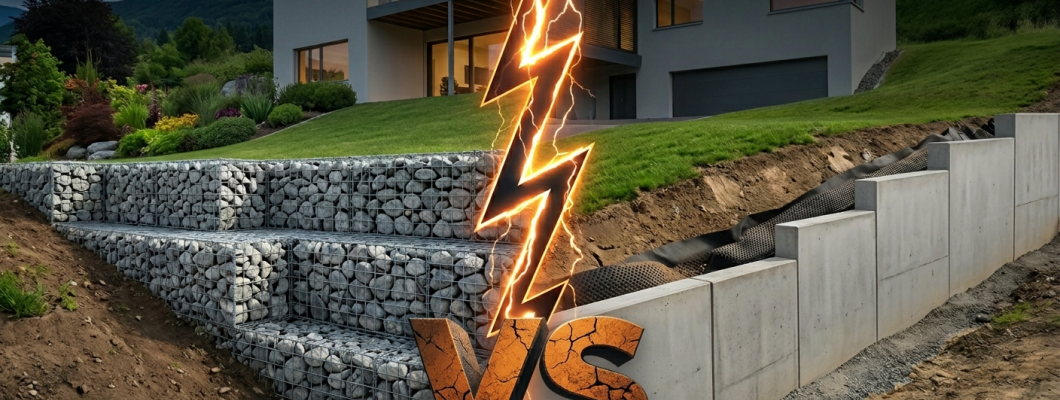
Габиони срещу Бетон:
Пълно техническо и икономическо ръководство
Разкриваме истината за дълготрайността, разходите и инженерните предизвикателства при изграждането на подпорни стени.
Какво представлява Габионът в съвременното строителство?
Габионът (от италиански gabbia – клетка) е инженерна конструкция, състояща се от заварени телени мрежи, запълнени с инертен материал (обикновено камък). Макар концепцията да е древна, съвременните габионни системи на Smart Metal Group са високотехнологичен продукт.
Използваната стоманена тел е с Galfan покритие – сплав от 95% цинк и 5% алуминий. Това не е обикновено поцинковане; Galfan осигурява 3 пъти по-висока защита срещу корозия, което гарантира експлоатационен живот на конструкцията от над 100 години, дори в агресивна среда.
Основната инженерна функция на габиона е да работи като гравитационна подпорна стена. Тежестта на камъка осигурява стабилност срещу земния натиск, докато мрежата държи структурата монолитна, но същевременно гъвкава.

Бетонни системи – Традиция, изпълнена с компромиси
Бетонът е най-разпространеният материал за подпорни стени през последния век. Той бива два вида: лят на място (монолитен) или сглобяем (бетонни блокове). Въпреки широкото си приложение, бетона е твърда, негъвкава структура. Това е неговата най-голяма слабост.
Когато една бетонна стена бъде подложена на натиск от слягане на почвата или замръзване на влагата, тя няма способността да се деформира. Резултатът е появата на пукнатини. Тези пукнатини не са само естетически проблем – те отварят път на водата към арматурата, което води до нейната корозия и прогресивно разрушаване на цялата конструкция. Бетонът изисква абсолютно прецизен дренаж, защото хидростатичното налягане зад него е най-честата причина за фатални аварии.
03. Директно сравнение: Защо Габионът печели?
Дренаж и хидростатично налягане
Габиони: Те са 100% самоотводняващи се. Водата преминава свободно през празнините между камъните. Това елиминира натрупването на водно налягане зад стената – фактор №1 за стабилност.
Бетон: Водата се натрупва зад стената. Необходима е скъпа система от дренажни тръби, геотекстил и обратен насип от филц.
Фундамент и земни работи
Габиони: Тъй като са гъвкави, те не изискват фундамент под линията на замръзване. Често е достатъчна само заравнена и уплътнена основа. Спестява до 50% от изкопните разходи.
Бетон: Изисква масивен армиран фундамент, вкопан дълбоко в земята. Повече изкопи и повече арматура „закопана“ в земята.
Сеизмична устойчивост
Габиони: При земетресение или тектонични движения, габионът се нагажда. Мрежата позволява леки деформации, без да губи здравината си. Те са "антисеизмични" по природа.
Бетон: Всяко рязко движение води до срязване или разцепване на монолита. Веднъж напукана, бетонната стена губи своята конструктивна стойност.
Технически спецификации: Габиони (SMG) vs. Бетон
| Показател | Габиони Smart Metal Group | Бетонни конструкции |
|---|---|---|
| Експлоатационен срок | Над 100 години (Galfan защита) | 30-50 години (до напукване) |
| Устойчивост на слягане | Отлична (Гъвкава връзка) | Много ниска (Монолит) |
| Монтаж при зимни условия | Възможен (Сух процес) | Невъзможен без добавки |
| Екологичен отпечатък | Много нисък (Натурален камък) | Висок (Емисии от цимент) |
| Крайна цена на обекта | До 30-40% по-ниска | Висока (материали + труд) |
Защо да изберете Габиони от Smart Metal Group?
Изборът на подпорна стена не е просто въпрос на цена днес, а на сигурност утре. Габионите предлагат уникална комбинация от инженерна сигурност, естетика и нулева поддръжка.
Започнете Вашия проект с правилните материали
Доставка до всяка точка на България. Сертифицирано качество.