
















-150x150.png)


























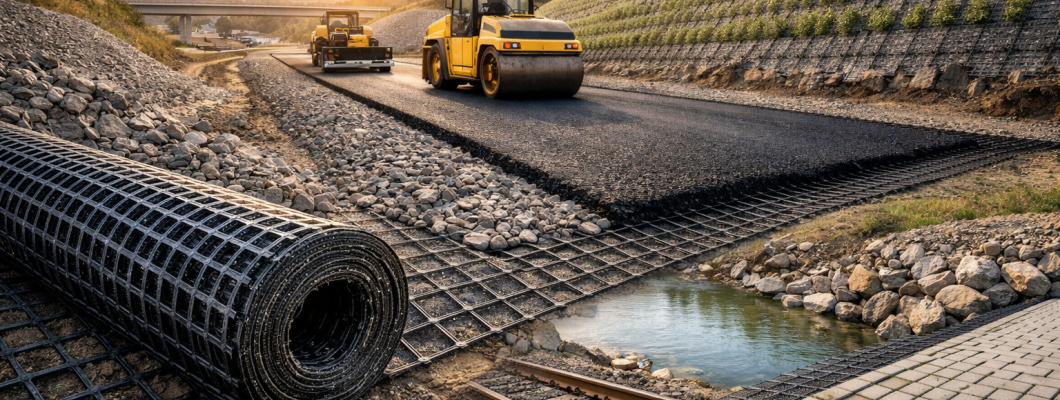
Road Geogrid – a reliable solution for reinforcement and long-term construction
Modern road and infrastructure construction requires materials that not only simplify the work process but also guarantee durability, stability, and safety. One of the most effective such materials is the road geogrid – a proven solution for reinforcing road pavements, soils, and slopes under various construction conditions.
In this article, we will look at what a geogrid is, where it is used, and why more and more professionals choose it for road and landscape construction.
What is a road geogrid?
A geogrid is a high-strength geosynthetic material with a mesh structure, made of polymer strands woven and fixed using special technology. It is supplied in rolls divided into uniform cells that ensure optimal load distribution.
Its main function is to create an additional reinforcing layer that increases the bearing capacity of pavements and stabilizes the soil.
Types of geogrids by material
Depending on the purpose and load, geogrids are:
polymer;
polyester;
stitched;
basalt;
fiberglass.
Choosing the right type of geogrid ensures maximum efficiency and long service life of the structure.
Where is road geogrid used?
Road construction and pavement repair
Geogrids are used in the construction of new roads, highways, parking areas, and heavily loaded platforms. Installing a geogrid under crushed stone or asphalt increases pavement strength and significantly extends its service life.
During repairs, the geogrid can be laid directly over the old surface and then covered with new asphalt. This prevents cracks, ruts, and unevenness by ensuring even load distribution.
Stabilization of low-bearing-capacity soils
When building on weak or uneven soils, including peat terrains, geogrids play a key role. They increase soil bearing capacity and prevent uneven settlement.
Geogrid for sidewalks and walkways
When installing paving stones and pedestrian areas, geogrids stabilize the structure, prevent displacement, and reduce cracking, ensuring long-lasting aesthetic results.
Reinforcement of slopes and embankments
Road geogrids are an effective solution for reinforcing steep slopes, especially in mountainous regions or areas with heavy rainfall. They prevent landslides and improve road safety.
Protection of channels, banks, and embankments
Geogrids reinforce riverbanks, canals, and artificial reservoirs, protecting them from erosion and landslides while enabling landscaping integration.
Railway infrastructure
In railway construction, geogrids stabilize embankments and increase track bearing capacity, preventing deformation caused by dynamic loads.
Key advantages of road geogrids
absorbs and distributes heavy loads evenly;
reduces the risk of cracks, subsidence, and deformation;
quick and easy installation;
resistant to moisture, temperature changes, and aggressive environments;
lightweight and easy to transport;
allows reduction of pavement thickness without loss of strength;
extends the service life of roads and sidewalks;
significantly reduces future maintenance costs (up to 40%).
Why choose a road geogrid from a reliable manufacturer?
High-quality geogrids are essential for the success of any construction project. Working with a trusted manufacturer guarantees compliance with standards, durability, professional support, and optimal value for money.
Conclusion
Road geogrids are a key element of modern construction – from roads and sidewalks to soil and slope reinforcement. They improve technical performance while providing long-term safety and cost efficiency.
Leave a Comment